
Key Takeaways
- Why IPC Remains a CQC Priority
- The IPC Framework CQC Uses
- Conducting an Effective IPC Audit
- Common IPC Audit Failures
- Turning IPC Audits Into Continuous Improvement
Why IPC Remains a CQC Priority
Infection prevention and control has become one of the most scrutinised areas in care provision since the COVID-19 pandemic. The CQC now expects services to demonstrate not just reactive responses, but embedded, proactive IPC cultures. Providers who fail to evidence robust IPC governance consistently receive enforcement action — making regular IPC auditing essential.
The IPC Framework CQC Uses
CQC inspectors assess IPC under the 'Safe' key question, drawing on the Health and Social Care Act 2008 Code of Practice. The ten criteria within the Code of Practice form the backbone of any IPC audit. These cover:
- Systems to manage and monitor IPC risks, including a designated IPC lead
- Provision of suitable, accurate information on infections to service users, visitors, and staff
- Ensuring appropriate antimicrobial use to reduce the risk of antimicrobial resistance
- Provision of adequate isolation facilities where necessary
- Adequate laboratory and diagnostic support
- Implementation of evidence-based IPC policies
- Effective hand hygiene practices across all staff
- Design and maintenance of the environment to reduce infection risk
- Appropriate decontamination of instruments and equipment
- Cooperation with public health authorities and disease surveillance
Conducting an Effective IPC Audit
1. Environmental Walkthrough
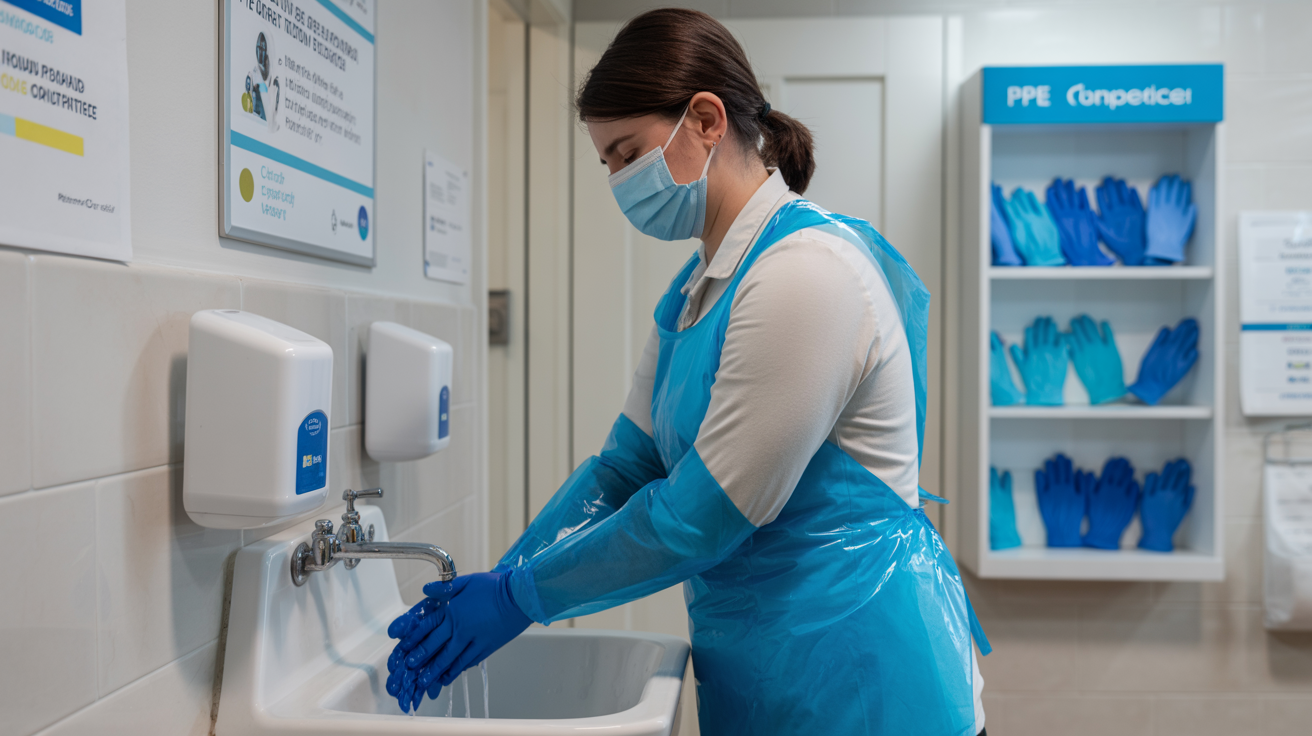
Start every IPC audit with a visual inspection. Check communal areas, bathrooms, kitchens, laundry rooms, and clinical spaces. Look for adequate handwashing facilities, correct waste segregation (clinical vs domestic), clean surfaces, and appropriate PPE availability at point of care.
Check Your Inspection Readiness
Free 2-minute assessment — instant results tailored to your service type.
2. Hand Hygiene Compliance
Hand hygiene audits should be observational and unannounced. Use the WHO's Five Moments for Hand Hygiene framework to assess compliance. Document completion rates and feed results back to staff during supervision.
3. PPE Usage
Observe staff donning and doffing PPE correctly. Audit stock levels to ensure supplies never run low. Check that PPE stations are clearly signed, accessible, and stocked with gloves, aprons, masks, and eye protection where applicable.
4. Cleaning Schedules and Standards
Verify that cleaning schedules are signed, that enhanced cleaning regimes are in place for high-touch surfaces, and that appropriate cleaning products are used. Consider using ATP bioluminescence testing to objectively measure surface cleanliness.
5. Outbreak Preparedness
Review your outbreak management plan. Ensure staff know how to identify symptoms, when to escalate, and how to implement isolation procedures. Check you have adequate contingency PPE stock and that communication protocols with local public health teams are current.
Common IPC Audit Failures
- No named IPC lead with allocated time for the role
- Incomplete or unsigned cleaning schedules
- Staff unable to describe correct hand hygiene technique when asked
- Expired cleaning products or inappropriately diluted solutions
- Failure to demonstrate learning from previous infection outbreaks
- Laundry processes that don't segregate soiled and clean items
Turning IPC Audits Into Continuous Improvement
The most effective services treat IPC auditing as an ongoing process, not a quarterly tick-box exercise. Use digital audit tools to track trends, set automatic reminders for follow-up actions, and benchmark your performance over time. MyCareAudit's IPC audit templates are aligned with the latest CQC Code of Practice and include AI-powered gap analysis to highlight areas requiring immediate attention.
Related Articles
Ensuring Ofsted Compliance: Best Practices for Meeting Updated Safeguarding Requirements
Discover comprehensive best practices to ensure your organisation meets updated Ofsted safeguarding requirements. Stay compliant and protect vulnerable individuals.

Top Reasons Care Homes Fail CQC Inspections in 2026
CQC Inspection Failure Reasons in Care Homes 2026 The Care Quality Commission (CQC) plays a vital role in ensuring that care homes in England provide safe, effective, caring, responsive, and well-l...

CQC Mock Inspection Guide 2026: Protect Your Care Home
CQC Mock Inspection Guide 2026: Protect Your Care Home An unannounced CQC inspection could arrive tomorrow — and if your documentation fails under scrutiny, your service could face significant comp...
Available in Your Area
MyCareAudit supports care providers across England. See how we help in these regions:

Sheref Ergun
Founder & Independent Health and Social Care Advisor at MyCareAudit. 20+ years in CQC, Ofsted, and NRSA compliance.
View full profile →CQC & Ofsted regulatory updates
Providers using MyCareAudit
Ready to Simplify Your Compliance?
Take a 2-minute audit readiness check — free, instant results, no commitment.